Skip to content
The Center for AI & Roboticsfor the Built Environment

Economic impact

Closing a 7-million-home gap, one trained crew at a time

In the DC–Baltimore region, the gap between housing demand and supply costs families and employers billions every year in lost productivity, displacement and stagnation.

The problem in numbers

National attainable housing deficit (units)
7M+
Average DC-metro construction cost per unit
$350K+
Construction workers needed nationally by 2030
2M+
Skilled-trades workforce gap, DC–Baltimore region
35%

What the region gets back

Direct skilled-trade jobs in five years
200+
Indirect jobs in manufacturing, logistics and services
350+
Wage premium for tech-enabled construction roles
20–35%
Attainable units supported in the first five years
1,000+
Months to deliver a project, or less
36 → 18

Lower hard costs mean more homes per dollar of public subsidy — potentially doubling DC’s and Maryland’s affordable output. New MBE/WBE/DBE contracting opportunities, local hiring preferences and resident equity models keep that value in the neighborhoods doing the work.

Housing production

  • VMC-enabled projects deliver units 40–60% faster, compressing timelines from 36 to 18 months or less.
  • 30–45% lower hard costs mean more homes per dollar of public subsidy — potentially doubling DC’s and Maryland’s affordable output.
  • Center graduates and technology are projected to contribute to 1,000+ attainable units in the first five years.

Business & competitiveness

  • Positions DC–Baltimore as a national center of excellence in housing technology.
  • Creates MBE/WBE/DBE contracting opportunities in the emerging construction-tech sector.
  • Stimulates regional manufacturing through demand for locally fabricated VMC components.
  • Generates tax revenue from construction activity, investment and graduates’ wages.

Community & neighborhood

  • Slows displacement in gentrification-pressured neighborhoods by delivering deeply affordable units faster.
  • Opens homeownership through for-sale affordable condo and co-op models.
  • Improves environmental quality with energy-efficient VMC and 3D-printed standards.
  • Builds community wealth through local hiring, small-business set-asides and resident equity models.
AI-driven operations after move-in(concept rendering)
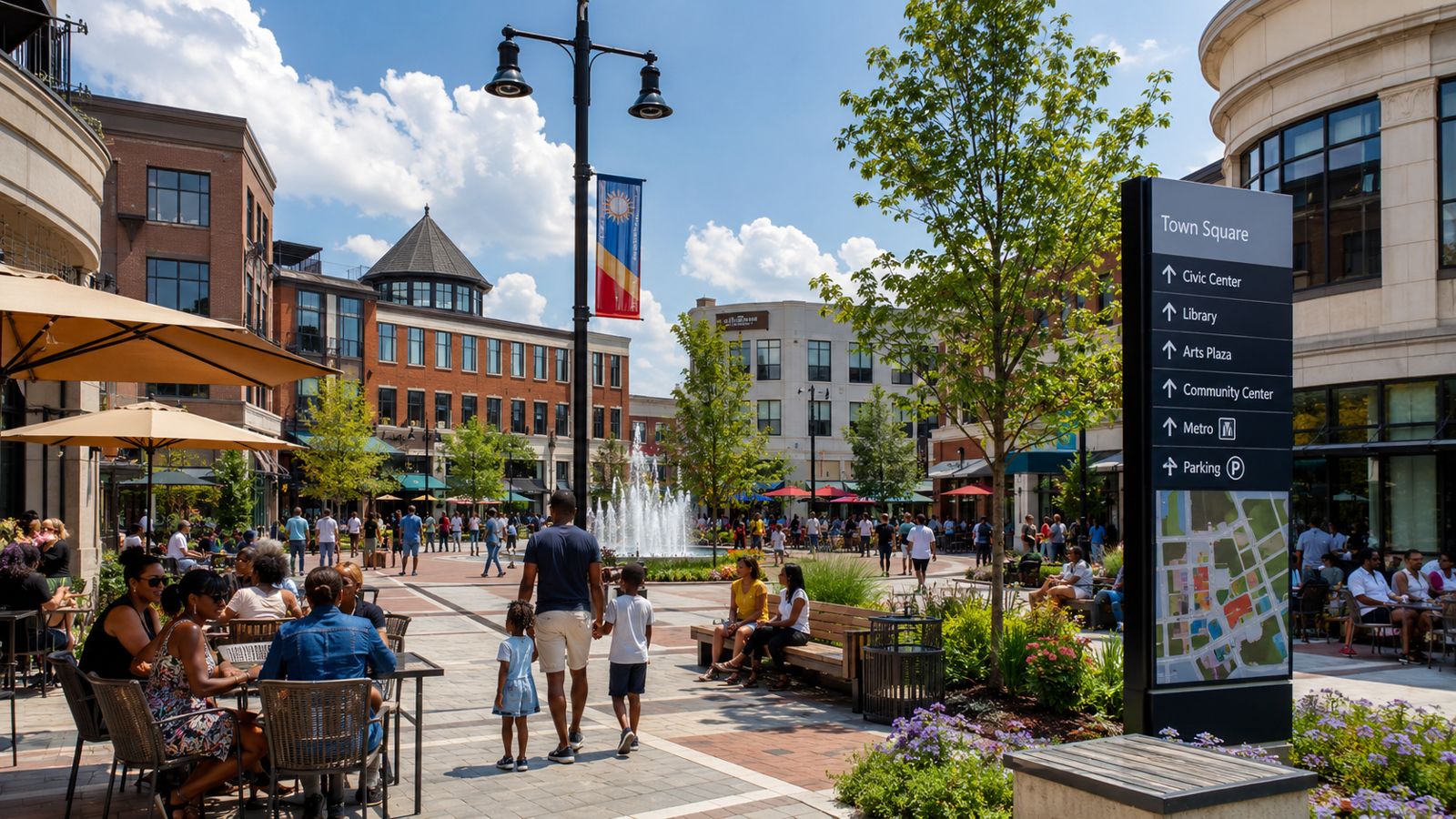
The goal: complete, walkable communities(concept rendering)